
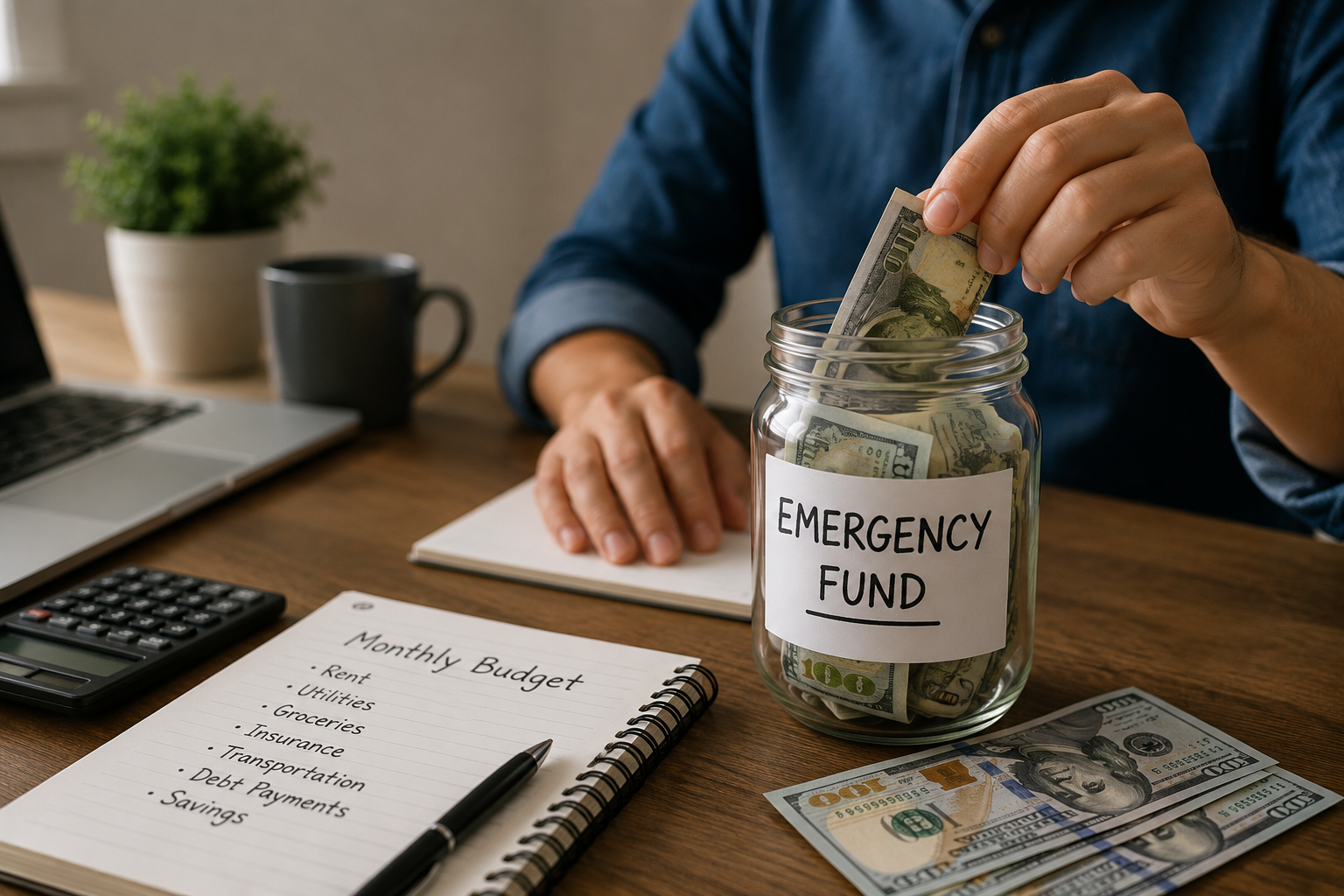
Emergency Fund: Why It’s the Foundation of Financial Security
Before you buy a single stock, open a retirement account, or chase the next hot investment trend, there’s one financial move that has to come first: building an emergency fund.
It’s not glamorous. It won’t double your money in a year. But it’s the single most important layer of protection between you and financial disaster.
Investing without an emergency fund is like building a house without a foundation—it might look fine until the first storm hits.
A job loss, an unexpected medical bill, or a major car repair can force you to sell investments at the worst possible time, lock in losses, or rely on high-interest debt.
An emergency fund breaks that cycle. It gives you breathing room, so one bad month doesn’t turn into a bad decade.
In this guide, you’ll learn exactly what an emergency fund is, how much you should save, where to keep it, and how to build one faster—even on a tight budget.
What Is an Emergency Fund?
An emergency fund is a dedicated pool of cash set aside to cover unexpected expenses or a sudden loss of income.
It’s not for vacations, new gadgets, or a great deal you don’t want to miss. It exists for one purpose only: to protect you when life doesn’t go according to plan.
Think of it as financial insurance that you fund yourself.
Its purpose is threefold:
- Prevents debt — You won’t need to rely on credit cards or personal loans when something goes wrong.
- Reduces stress — Knowing you can cover several months of expenses provides genuine peace of mind.
- Protects your investments — You won’t be forced to sell stocks or retirement accounts during a market downturn just to pay your bills.
Without this cushion, every unexpected expense becomes a crisis.
With it, unexpected expenses become inconveniences.
When Should You Use an Emergency Fund?
An emergency fund is meant for genuine emergencies—situations that are urgent, necessary, and completely unexpected.
Examples include:
- Job loss or reduced income — Covering rent, groceries, and bills while searching for new work.
- Medical or dental emergencies — Emergency surgery, ER visits, or treatments not fully covered by insurance.
- Major car repairs — A failed transmission or engine when your vehicle is essential for work.
- Home repairs — Burst pipes, roof leaks, or a broken HVAC system during extreme weather.
- Family emergencies — Last-minute travel to help an ill family member or deal with a family crisis.
A simple rule:
If it’s urgent, necessary, and unexpected, it probably qualifies.
A weekend sale or a new smartphone does not.
How Much Should You Save?
The right amount depends on your job stability, income, and personal risk.
Most financial experts recommend one of these three targets:
3 Months of Expenses
Best for people with stable jobs, dual-income households, or relatively low financial obligations.
Example:
A salaried employee with a secure job and no dependents may feel comfortable with three months of essential expenses saved.
6 Months of Expenses
This is the recommendation for most people.
It’s ideal for single-income households, people with children, or anyone with moderate financial risk.
Example:
A single parent with a steady job would benefit from six months of savings in case of illness or unemployment.
12 Months of Expenses
Best for freelancers, business owners, commission-based workers, or anyone with unpredictable income.
Example:
A freelance designer whose income changes from month to month needs a larger financial cushion.
There isn’t one “perfect” number.
The goal is to match your emergency fund to your personal level of financial risk.
How to Calculate Your Emergency Fund
Follow these four simple steps.
1. List your essential monthly expenses.
Include:
- Rent or mortgage
- Utilities
- Groceries
- Insurance
- Minimum debt payments
- Transportation
Leave out discretionary spending like vacations, entertainment, and subscriptions.
2. Add everything together.
This gives you your monthly survival budget.
3. Choose your target.
Decide whether you want to save 3, 6, or 12 months of expenses.
4. Multiply.
Example
Monthly essential expenses: $2,500
Target: 6 months
Emergency fund goal:
$2,500 × 6 = $15,000
That number becomes your savings goal.
Where Should You Keep Your Emergency Fund?
Your emergency fund should provide three things:
- Safety
- Liquidity
- Reasonable returns
That means avoiding stocks, cryptocurrencies, or any investment that could lose value overnight.
Good options include:
- High-yield savings accounts
- Money market accounts
- Short-term Certificates of Deposit (CDs)
- Cash management accounts
Avoid investing your emergency fund in the stock market.
The purpose of this money is simple:
It needs to be there exactly when you need it—not only when the market happens to be performing well.
How to Build Your Emergency Fund Faster
If your savings goal feels overwhelming, these strategies can help.
- Automate your savings with a transfer every payday.
- Put tax refunds, bonuses, and cash gifts directly into your fund.
- Cancel unused subscriptions and reduce recurring expenses.
- Earn extra income through freelancing, part-time work, or selling unused items.
- Save raises before lifestyle inflation catches up.
- Break your goal into smaller milestones, such as every $1,000 saved.
Small wins make large goals feel much more achievable.
Common Mistakes to Avoid
Avoid these common errors:
- Keeping your emergency fund in a checking account where it’s easy to spend.
- Investing emergency savings in stocks or crypto.
- Saving too little to cover real emergencies.
- Using the fund for vacations, shopping, or other non-emergencies.
- Waiting until you have “extra money” before starting.
- Forgetting to rebuild the fund after using it.
Frequently Asked Questions (FAQ)
Can I invest my emergency fund?
Generally, no.
Emergency funds should remain safe and immediately accessible. Investments can lose value at exactly the wrong time.
Can I use a credit card instead?
A credit card may help temporarily, but it isn’t a replacement for real savings.
High-interest debt can make an emergency even worse.
How long does it take to build an emergency fund?
It depends on your income and savings rate.
Many people build a one-month emergency fund within three to six months.
Reaching a full three-to-six-month fund often takes one to two years of consistent saving.
Should I invest while building an emergency fund?
Most financial experts recommend saving at least one month of emergency expenses first.
After that, many people continue building their emergency fund while also making modest investments.
Conclusion
An emergency fund may not be the most exciting part of personal finance, but it’s the foundation that protects everything else you build.
Start by calculating your monthly essential expenses.
Choose a savings goal that matches your financial situation.
Keep the money somewhere safe, accessible, and separate from your investments.
Whether your goal is three months, six months, or a full year of expenses, the most important step is simply getting started.
Even small contributions made consistently can grow into a financial safety net that protects your future.
Your future self will thank you.